
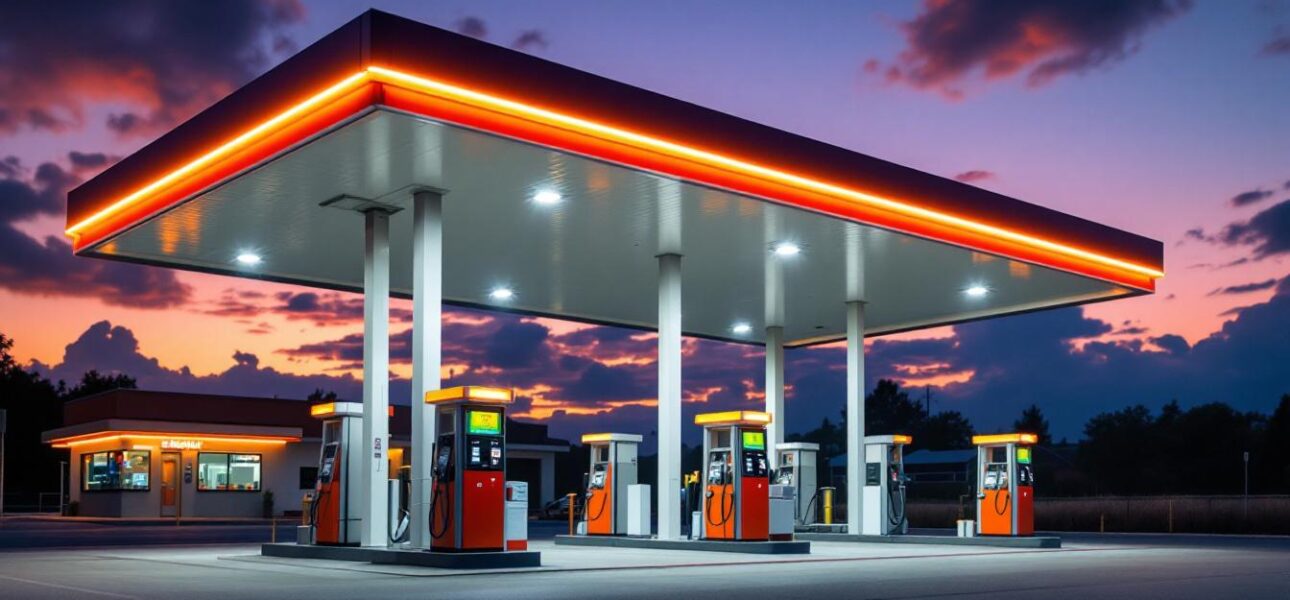
Gas station canopy construction is the engineered design and build of roofed structures over fuel islands to protect customers, equipment, and operations. It involves structural steel, lighting, drainage, and code compliance. For Galveston operators, the right canopy reduces risk, improves throughput, and strengthens brand visibility—especially in coastal wind and rain.
Define function, codes, and schedule first. A winning canopy plan aligns branding, 130–150 mph wind design, 14–16 ft clear height, and safe lighting. Then map permits, utilities, and fabrication lead times so the steel arrives when foundations cure and electrical rough-in is ready.
Tip Top Builders delivers land-to-opening support for fuel retail across Texas. We handle planning and design, site preparation and excavation, construction management, and turnkey build. This guide shows how to make your canopy durable, code-compliant, and easy to maintain.
Quick Summary
- Set clear performance targets: wind, drainage, lighting, and traffic flow.
- Sequence permits, utilities, footings, steel, and fascia to cut delays.
- Use LED lighting (20–30 footcandles at grade) for safety and efficiency.
- Design 1–2% canopy slope with hidden gutters and protected downspouts.
- Coordinate fuel, power, and data runs before slab and island concrete pours.
What is a gas station canopy?
A gas station canopy is a steel-framed, roofed structure installed over fuel dispensers to shield customers and equipment from weather while supporting lighting, signage, and drainage. Its design integrates structural loads, wind uplift, electrical systems, and stormwater management to keep the forecourt safe and efficient.
At its core, a canopy is an engineered system that blends architecture, structural steel, and MEP integration. Typical systems feature 20–30 ft column spacing, 14–16 ft clear height for vehicle access, 1–2% roof slope, and integrated LED lighting. The assembly includes columns, beams, purlins, decking, fascia, soffit, gutters, and downspouts.
- Primary functions
- Protect people and equipment from rain, sun, and wind.
- Provide consistent lighting levels (target 20–30 footcandles at grade).
- Reinforce branding via fascia color and sign integration.
- Core components
- Steel columns and beams with bolted connections.
- Decking panels, fascia, soffit, and integrated gutters.
- Conduits for power, controls, security, and signage.
In our experience across Texas, well-designed canopies reduce slip-and-fall incidents, speed fueling during storms, and lower maintenance. For a broader build context, see our gasoline station construction guide covering full-site coordination.
“Quality in a construction project is not an act, it is a habit “Henry Ford
Why canopy design and construction matter
Great canopy design improves safety, throughput, and brand trust. It controls glare, sheds water away from fueling, withstands 130+ mph winds, and simplifies maintenance. Operators see faster service during rain, fewer liability risks, and better curb appeal—key advantages in competitive fuel retail.
Here’s the thing: forecourt experience drives repeat visits. Bright, uniform light makes payment, fueling, and wayfinding faster. A clean fascia and soffit cue quality. Robust drainage prevents ponding around dispensers. In storm-prone Gulf markets, wind and corrosion resistance extend lifespan and reduce callouts.
- Safety and liability
- Uniform lighting reduces trip hazards; aim for 20–30 footcandles.
- Dry fueling positions lower slip risk; 1–2% roof slope helps.
- Clear sightlines aid video coverage and staff supervision.
- Operational performance
- Consistent illumination speeds card taps and hose swaps.
- Tall clearances (14–16 ft) accommodate SUVs and delivery vans.
- Accessible downspouts simplify seasonal cleanouts.
- Brand and compliance
- Fascia color and edge lighting reinforce identity.
- Wind design in Gulf counties commonly targets 130–150 mph.
- Drainage integrates with site stormwater plans and BMPs.
Many Texas owners pair canopy upgrades with interior C-store refreshes to lift basket size. If you’re planning both, our convenience store building guide outlines sequencing to minimize downtime.