
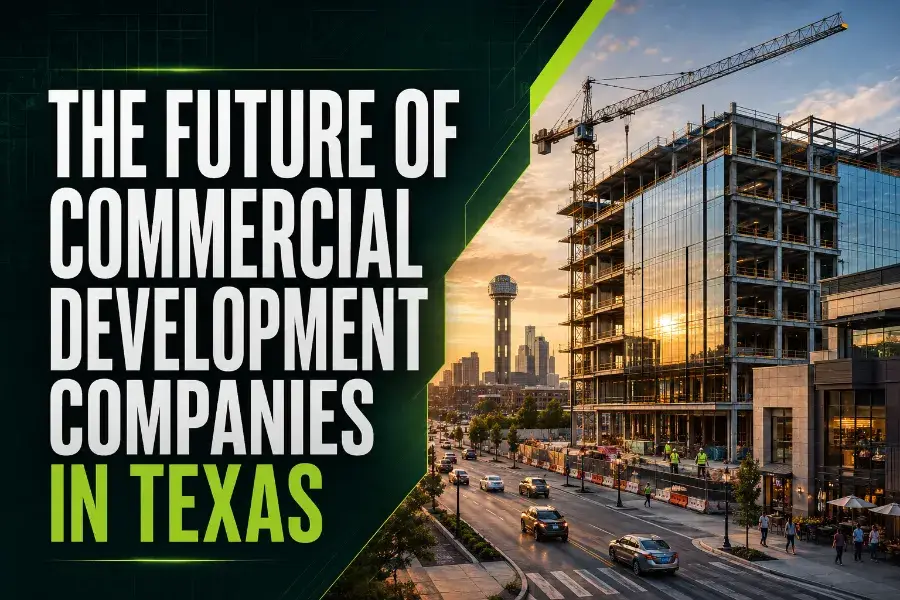
There are new times ahead for Texas commercial real estate development. Owners, investors, and the community have demands that go beyond identifying land and constructing buildings. There is now a demand for facilities that not only function but are also aesthetic, efficient, and adaptable.
That shift is changing the role of the commercial development company Texas property owners choose. The developers of the future will have knowledge regarding the entire development cycle from the initial conception to site analysis, planning, design, construction, finance, and value.
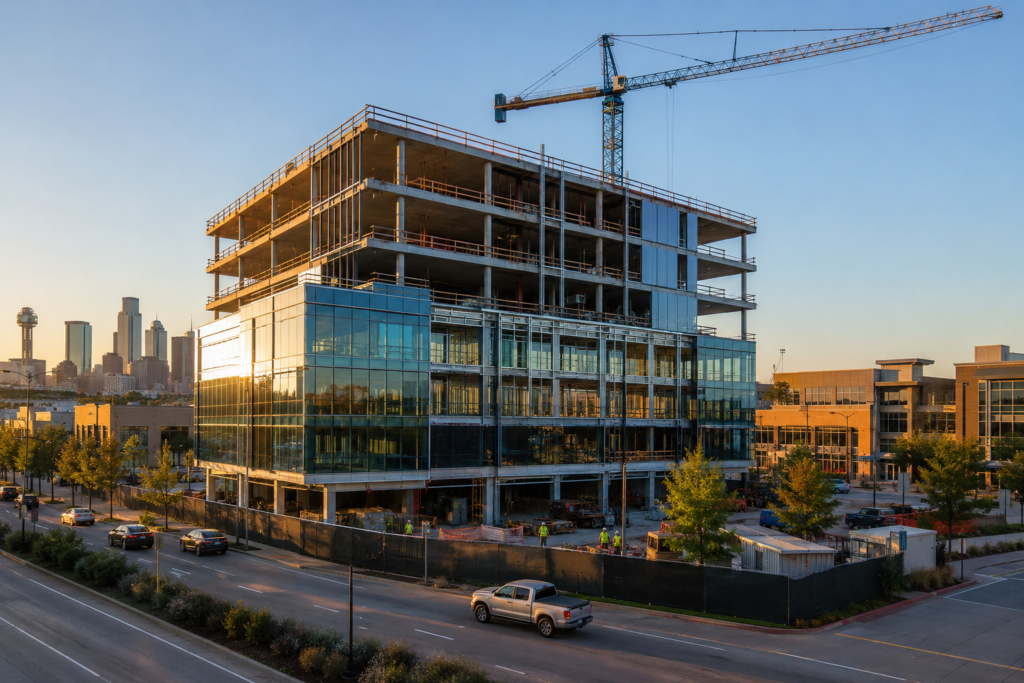
Tip Top Builders represents this broader model. The Texas real estate and construction group combines construction management, project management, architecture and design, real estate development, business development, and investment capital. Its experience includes gas stations, convenience stores, and commercial facilities, with completed projects across Texas.
So what will the next generation of commercial development companies look like? Several trends point toward a more integrated, practical, and business-focused approach.
Future Development Will Become More Integrated
Commercial projects involve decisions that are closely connected. A site decision can affect design. Design can affect construction cost. Construction choices can affect maintenance. Financing can influence the schedule and scope.
When these decisions are handled in isolation, owners can end up solving one problem only to create another. An integrated development approach brings the major pieces together earlier.
That does not mean one company must do everything. It means the development team should communicate well and understand how its decisions affect the wider project.
Flexible Properties Will Matter More
Businesses do not remain static. A tenant may grow, change its operations, add services, or need a different layout.
Developers therefore have an opportunity to create commercial spaces that can adapt. Flexible layouts, accessible infrastructure, efficient circulation, and thoughtful utility planning can make a property easier to modify later.
Flexibility does not mean designing for every possible future. It means avoiding unnecessary limitations today.
For investors, that can improve the property’s ability to attract different users over time.
Construction and Development Will Work More Closely in the Future
The traditional separation between development and construction can create communication gaps. A development team may establish a concept while the construction team later discovers practical challenges.
Bringing construction knowledge into earlier decisions can improve the process. Builders can identify constructability concerns, likely cost pressures, site challenges, and scheduling issues before the plan is locked.
This is one reason a commercial development company with construction capabilities can offer a different perspective. Development becomes connected to what can realistically be built, how it can be built, and what it may cost.
Future Technology Will Support Better Project Delivery
Digital tools are becoming part of everyday project coordination. Scheduling, documentation, design information, communication, and progress tracking can be managed more efficiently when teams use appropriate technology.
The future, however, will not belong to companies that simply buy the most software. It will belong to teams that use technology to solve actual problems.
A dashboard is only useful if it helps people make decisions. Digital plans are useful when they reduce confusion. Project tracking matters when it helps the team identify delays early.
Technology should support good management, not replace it.
Customer Experience Will Shape Commercial Design in the near Future
Commercial facilities must be usable. People know when it is hard to find an entrance, park a car, navigate around the facility, or when the spaces are uncomfortable and inefficient.
Development will focus more and more on the experience of the customer arriving at the site rather than the visual of the building itself.
That is particularly true for convenience retail and gas station development. Vehicle access, visibility, fuel island access, retail entrance, parking, and pedestrians will need to work well together.
A good development should create a seamless experience for the customer.
Investment Thinking Will Shape Development
Commercial development is ultimately an investment decision. Construction quality matters, but so do location, tenant appeal, operating costs, maintenance, functionality, and long-term demand.
Developers with an investment perspective can evaluate decisions through the lens of future value rather than focusing only on initial construction.
Tip Top Builders includes investment and capital among its services, alongside development and construction capabilities. That combination reflects a broader understanding of how commercial properties move from ideas to completed assets.
Texas Will Continue to Reward Adaptability
Texas is not one single commercial market. Different cities and communities have different needs, development patterns, and customer expectations.
That means future-focused developers will need to stay adaptable. They will need to understand local conditions while also recognizing broader shifts in commercial real estate and construction.
The companies best positioned for the future will not necessarily be those making the biggest promises. They will be those capable of adjusting their approach when the project, market, or business objective changes.
What Business Owners Should Look For
If you are evaluating a commercial development company Texas business owners can rely on, look beyond a list of services.
Ask how the company approaches site planning, design, construction, project management, financing, and long-term value. Ask whether the team can explain how one decision affects another.
Review completed projects and look for evidence of practical execution. A finished commercial property can reveal how well a company balances appearance, functionality, customer needs, and construction quality.
Most importantly, make sure the developer understands why you are building the property. A strong development partner should be interested in the business purpose behind the project, not just the structure itself.
A More Connected Future for Texas Commercial Development
The future of commercial development in Texas will likely belong to companies that can connect ideas with execution.
Property owners require more than buildings; they require properties that work for the people who visit the property, businesses that operate within it, investors, and the surrounding community. Accomplishing all this requires proper planning, practical design, disciplined construction, proper communication, and financial consideration.
The commercial development company Texas owners opt for could potentially affect much more than just the construction site. The right partner can help turn a concept into a property that works today while remaining adaptable tomorrow.
The future is not simply about building more commercial space. It is about building smarter, more useful, and more resilient places for businesses to grow for owners, investors, and communities alike.
Frequently Asked Questions
What does a commercial development company do?
A commercial development company can coordinate or provide services covering the planning, design, financing, construction, and delivery of commercial properties. The exact role varies by company, so owners should ask which services are handled directly and which are coordinated through outside partners.
Why choose a commercial development company with construction experience?
Construction experience could be helpful in linking development considerations to building considerations. It could assist in identifying potential costs, schedule, design, sites, and constructability problems early on in the process.
How long does commercial property development take in Texas?
There is no standard timeframe. This varies depending on the property type, site, design, approvals, financing, construction, utilities, and various other aspects. A realistic timetable should be established based on the project at hand and not on some general estimates.
How should I choose a commercial development company in Texas?
Compare relevant experience, prior successes, development and construction capabilities, communication, financial know-how, project management ability, and references. Find out what the company’s approach to your particular site and business goals might be prior to making any commitments.